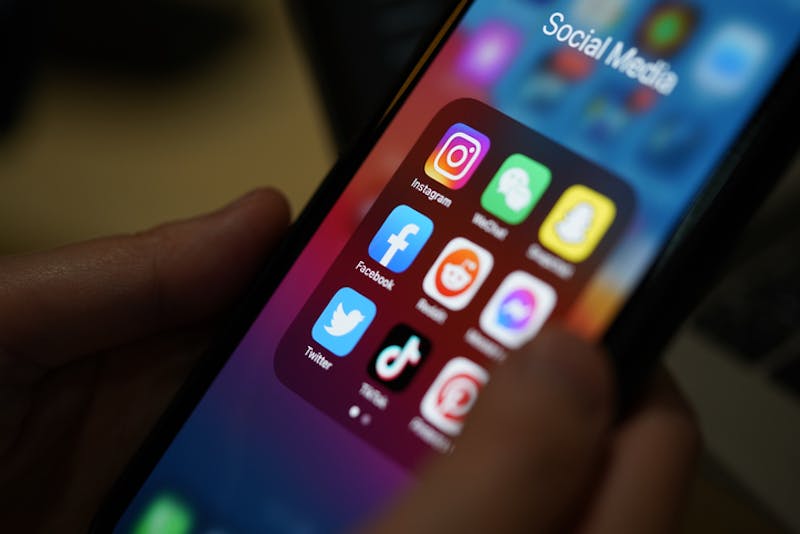
Social media can affect your motor vehicle accident case because insurance adjusters and defense attorneys actively search claimants' accounts for anything that undermines an injury, questions credibility, or suggests shared fault. A single photo, comment, or check-in, even one posted long before the crash, can be pulled out of context to argue you are exaggerating your injuries or downplaying your role in the accident.
Joshua P. Davis has spent more than 18 years representing people injured in Houston-area crashes, taking over 100 cases to trial and winning more than 70 appeals along the way. That kind of courtroom experience teaches a hard lesson early: cases are rarely won or lost on the facts of the wreck alone. They are won or lost on evidence, and today, some of the most damaging evidence in a car accident claim comes from something as ordinary as a Facebook post or an Instagram photo. Knowing how this works and what to do about it protects the compensation you are entitled to recover.
How Social Media Posts Become Evidence in Your Case
Insurance companies and defense attorneys treat social media accounts as an extension of discovery. Once a claim is filed, adjusters routinely search a claimant's name across Facebook, Instagram, TikTok, and X, looking for anything relevant to the injuries or the crash itself.
Attorneys are formally instructed to preserve this material from the earliest stages of a case. The American Bar Association has published guidance directing litigators to include social media in litigation-hold notices the same way they would emails or paper files, which shows how standard this practice has become across the industry.
What Insurance Companies Look For on Your Accounts
Insurance adjusters and defense attorneys are trained to build a narrative that reduces what an insurer owes, and social media often hands them the material to do it. Here is how that plays out, from the first search of a claimant's profile to posts believed to have been long deleted.
Common Red Flags Adjusters Search For
Once a claim is filed, adjusters typically search a claimant's profiles for:
- Photos or videos showing physical activity, travel, or sports that seem inconsistent with reported injuries
- Check-ins or location tags placed near the time of the crash
- Comments or captions that could be read as admitting fault, even casually, such as "I probably should have been paying more attention"
- Gaps or contradictions between what a claimant told their doctor and what they posted
- Posts from family or friends referencing recovery, mood, or activities
None of these, taken alone, usually tells the whole story. Insurance companies do not need the whole story, though. One sentence or one photo is often enough to justify a lower settlement offer.
Old Photos Get Read Out of Context
A vacation photo or workout post can hurt a legitimate claim once it reaches an adjuster's desk. The problem usually comes down to a few things:
- Adjusters and jurors tend to take images at face value, without knowing when they were taken or what they actually show
- Content posted three weeks after a crash might have been captured a year earlier, but without a clear date, it can be used to suggest an injury is not as serious as reported
- Most people sharing a throwback photo are not thinking about a pending claim, but defense attorneys are, and they will use any ambiguity to their advantage
- The gap between when a photo was taken and when it was posted is rarely visible to whoever reviews it later, which is exactly what makes it risky
Deleted and Private Posts Are Not Always Out of Reach
Privacy settings and deletion feel like protection, but neither guarantees it. A claimant's content can still surface through:
- A mutual connection, a tagged photo, or an earlier screenshot that has already preserved the post
- Platform data retained long after a user deletes the original content
- A subpoena or formal discovery request filed once litigation begins
- Court rulings holding that privacy settings do not shield relevant social media content from discovery
- Guidance from the American Bar Association confirming that parties in litigation are entitled to discovery of all relevant, non-privileged information, with social media treated no differently than emails or paper documents once a claim is filed
Deleting Posts After a Crash Can Be Considered Spoliation
Deleting posts after a crash can be considered spoliation, meaning the destruction of evidence relevant to a legal claim. Once a person knows or reasonably should know that a lawsuit is possible, a legal duty arises to preserve evidence, including social media content.
Courts take this seriously. In Gatto v. United Airlines, a federal court sanctioned a plaintiff after he deactivated his Facebook account during litigation, resulting in the account and its contents being permanently deleted. The judge instructed the jury that it could presume the deleted evidence was unfavorable to him, and that single decision reshaped the outcome of his case.
Deleting an account the moment a claim is anticipated is often worse than doing nothing. A better approach is to stop posting new content and talk to an attorney about how to handle what already exists.
How Texas's Comparative Fault Law Raises the Stakes
Texas's comparative fault law raises the stakes of what gets posted online because a single statement suggesting shared blame can reduce or eliminate compensation.
Under Section 33.001 of the Texas Civil Practice and Remedies Code, an injured person cannot recover any damages if a jury finds them 51% or more responsible for the accident, and any recovery is reduced by the claimant's assigned percentage of fault below that threshold.
A casual comment like "I didn't see the light change either" can hand the defense an argument for partial fault, even when the truth is more complicated. In a state where responsibility is measured in percentage points, that kind of ambiguity carries a direct dollar value.
Practical Steps to Protect Your Case on Social Media
Protecting a case on social media does not require abandoning it altogether. A few habits go a long way after a crash:
Stop posting about the accident, injuries, recovery, or the legal case entirely
Assume nothing posted is fully private, even with strict privacy settings
Do not delete existing posts or deactivate an account once a claim is anticipated; talk to an attorney first
Ask close friends and family not to tag you in photos or posts while the case is pending
Avoid accepting new friend or follower requests from unfamiliar accounts during a claim
Given how widely used these platforms are (Pew Research Center found that 71% of U.S. adults use Facebook and half use Instagram in 2025), most claimants have some digital footprint an insurer can review. That makes these habits relevant to nearly every case, not just the unusually active poster.
Why You Need a Lawyer Who Understands This From Day One
A lawyer who understands social media's role in a claim needs to be involved from day one, because damage from a poorly timed post often happens before a case ever reaches a courtroom.
At Davis Law Group, Joshua P. Davis and Associate Attorney Margaret R. Allbritton walk every client through exactly what to avoid online during their very first conversation, long before an insurance company has a chance to build a case against them.
This guidance reflects a broader philosophy at the firm: every client deserves a personal advocate, not a number on a caseload. That approach has helped secure verdicts in motor vehicle accident cases such as Holt v. Jones ($1,016,151 following a four-day jury trial) and Walker-Sanneh v. Lewis, part of more than $50 million recovered for clients across more than 2,500 cases handled by the firm.
Protect Your Case Before You Post
Social media has become part of nearly every personal injury claim, and the mistakes are usually made in the days right after a crash, long before anyone realizes the stakes. Davis Law Group has spent more than a decade helping injured people in Houston navigate exactly these moments, combining Joshua P. Davis's trial record with a firm-wide commitment to treating every client as a person, not a case file.
If you have been hurt in a motor vehicle accident, the safest first step is a conversation with an attorney before your next post. Contact Davis Law Group to schedule a case evaluation today.
Sources
- American Bar Association: Discovery and Preservation of Social Media Evidence
- Texas Civil Practice and Remedies Code Section 33.001, Texas Constitution and Statutes
- Texas Civil Practice and Remedies Code Section 16.003, TexasLawHelp.org
- Pew Research Center: Social Media Fact Sheet
Disclaimer: This content is for informational purposes only and does not constitute legal advice. Reading this page does not create an attorney-client relationship. If you've been injured, contact a licensed attorney to discuss the specifics of your case.